- Thimerosal Material Safety Data Sheet.
- Explore Thimerosal and conditions associated with exposure to it in the Comparative Toxicogenomics
Database
- SafeMinds (Watch the video
added 10/20/2010)
Between 80% and 90% of the flu shots
in any given year still contain
thimerosal. Most consumers remain unaware that these vaccines still
contain mercury.
- Environmental Working Group (Thimerosal
- Skin Deep: Cosmetic Safety Reviews added 10/10/2010)
Mercury is considered particularly
toxic to the developing brain during
pregnancy, infancy and childhood. FDA has banned the use of mercury
compounds in all cosmetics except those used around the eyes, where
levels are limited to 65 parts per million (ppm). In 2007 the use of
mercury in all cosmetics was banned in Minnesota.
- Toxicology Letters (full
article added 9/14/2010):
This study provides evidence that Hg
exposure can affect human immune function within the range of exposures
found within populations worldwide, and that a major effect of Hg
exposure is the dysregulation of signal transduction pathways, leading
to excessive inflammatory cytokine release in the case of
iHg and MeHg exposure and suppression of immune responses in the case
of EtHg. (thimerosal)
- Neurochemical Research (full
article added 9/14/2010):
The persistent
alterations of brain opioid
systems
ensuing from early life exposure to Thimerosal is just one element of a
plethora of neurodevelopmental pathologies induced by this mercurial in
animals
and humans [6-9,11]. Its harmful effects are likely to be augmented by
other
vaccine adjuvants, such as aluminum, formaldehyde or antibiotics, and
by
various environmental toxins [31,43,44].
Particularly aluminum compounds, added to vaccines to
augment their immunogenicity, have been shown to synergistically
potentiate
Thimerosal's neurotoxicity [43]. Thus in the presence of other toxins
or
substances, which per se may be rather innocuous, even small doses of
THIM in
vaccines can lead to neurological injury in vulnerable children.
In conclusion, this study documents that parenteral
administration of Thimerosal to suckling rats at doses equivalent to
those used
in pediatric vaccines or higher produces lasting alterations of MORs in
several
brain regions and damage to neurons.
If analogous changes occur in the brains of some
children, they are likely to have profound neurological,physiological
and
behavioral consequences, which may be relevant for certain
neurodevelopmental
disorders. These data argue for removal of Thimerosal from all infant
vaccines.
- Agency for Toxic Substances & Disease
Registry (CDC): The effects of
exposure to any hazardous
substance depend on the dose, the
duration, how you are exposed...
- American Academy of Pediatrics:
There is no
convincing evidence of harm
caused by the small amounts of Thimerosal
in
vaccines...
In 1999, the Public Health Service
agencies and the AAP recommended that Thimerosal be taken out of
vaccines as a precautionary measure.
- Center for Disease Control and Prevention
(CDC): There is no
convincing
evidence of
harm caused by the low doses of Thimerosal in vaccines... However, in
July 1999, the Public Health Service agencies, the American
Academy of Pediatrics, and vaccine manufacturers agreed that Thimerosal
should be reduced or eliminated in vaccines as a precautionary measure
- Environmental
Protection Agency: Many
states have enacted
legislation and written regulations with the goal
of reducing mercury emissions to air, land and water. These actions
cover a range of topics, including banning the sale of certain
mercury-containing products...
- Food and Drug Administration:
because of an increasing awareness of the theoretical potential for
neurotoxicity... the Food and Drug Administration has worked
with, and continues to work with, vaccine manufacturers to reduce or
eliminate Thimerosal from vaccines.
- Health Care Without
Harm: Position
on Thimerosal In Vaccines; Mercury
is
a potent
neurotoxin.
- National
Network for Immunization Information: no scientific
evidence that Thimerosal preservative in vaccines causes harm
- SafeMinds: risks to infants and children of
exposure to mercury from medical products, including Thimerosal in
vaccines.
- Wisconsin
Department of Natural Resources: Vaccines Containing Thimerosal
are Hazardous
Waste when Discarded
Thimerosal Material Safety Data Sheet
This document
describes Thimerosal including its usage,
physical data, stability, toxicology, toxicity and personal
protection. According to the United States Department of Labor,
Occupational Safety & Health Administration, a Material Safety Data
Sheet is a required part of Workplace
Chemical
Safety
Programs: "All employers with hazardous chemicals
in their
workplaces must have labels and MSDSs for their exposed workers, and
train them to handle the chemicals appropriately."
Environmental
Protection
Agency
Many
states have enacted legislation and written regulations with the goal
of reducing mercury emissions to air, land and water. These actions
cover a range of topics, including banning the sale of certain
mercury-containing products, enacting product-labeling legislation,
establishing disposal bans and establishing education and collection
programs for mercury and mercury-containing products.
State
regulations for mercury use and release can be more stringent than
federal regulations. We recommend that you contact the appropriate
state environmental office for more information regarding how mercury
might be regulated in your state. The state
environmental
agencies
provide links to various state and regional environmental offices with
information regarding mercury regulation in their jurisdictions.
Health
Care
Without
Harm
http://www.noharm.org/us_canada/
Health Care
Without
Harm
is an international coalition of more than 470 organizations in 52
countries working to transform the health care sector so it is no
longer a source of harm to people and the environment.
http://www.noharm.org/us_canada/issues/toxins/mercury/
Mercury
is a potent neurotoxin that can harm the brain, spinal cord,
kidneys
and liver. It is used throughout health care in a variety of products
including thermometers, sphygmomanometers, dental amalgam, laboratory
chemicals and preservatives such as Thimerosal, cleaning agents, and
various electronic devices such as fluorescent lamps and computer
equipment.
The
cumulative usage, spills, breakages and disposal of these products
makes the health care sector a significant contributor of mercury
pollution in the environment.
Fortunately,
it
is
relatively
easy
to
phase
out
the
use
of
mercury
because
of
the
many
safe,
cost-effective
non-mercury
alternatives
that
exist for
nearly all uses of mercury in health care.
As
part of a global initiative to reduce the use and spread of mercury in
all aspects of society, Health Care Without Harm is leading the effort
to eliminate mercury from the health care sector.
Health
Care
Without
Harm
Position
on
Thimerosal
in
Vaccines
http://www.noharm.org/global/issues/toxins/mercury/vaccines.php
Vaccination
programs
provide
important
public
health
benefits.
Health
Care
Without
Harm
(HCWH)
recognizes
that
the
continuity
and
ongoing
development
of
essential
vaccination
programs are key to achieving global public
health. We also recognize the importance of responding to concerns
about Thimerosal in vaccines.
Thimerosal
contains
a
kind
of
organic
mercury
called
ethylmercury,
used
in
vaccines
as
a
preservative.
Methylmercury,
another
kind
of
organic
mercury,
is
a potent developmental neurotoxicant. Although not as
thoroughly studied, ethylmercury is similar enough to methylmercury and
has properties sufficient to raise legitimate concerns about its impact
on the developing brains of children who are exposed to Thimerosal in
vaccines.
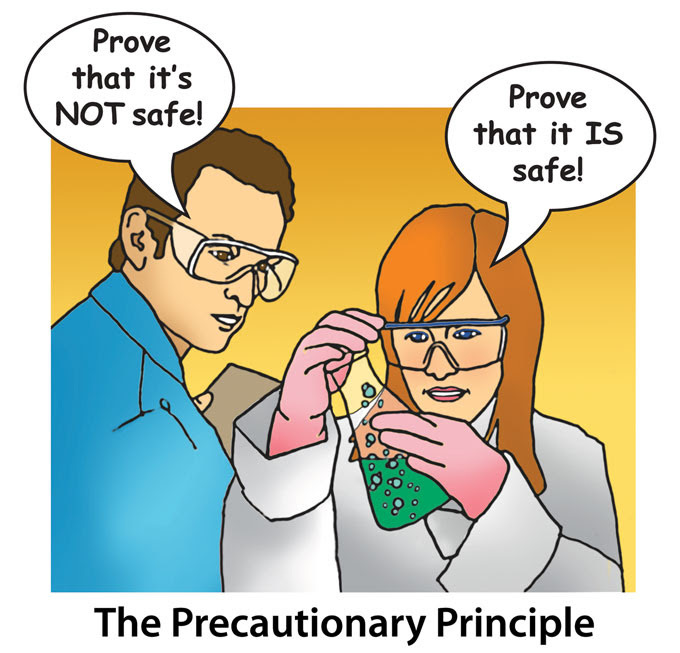
HCWH
supports a
precautionary approach regarding the use of Thimerosal in vaccines,
based on available scientific information.
- Despite
the
lack
of
conclusive
scientific evidence of harm from Thimerosal,
enough plausible concern has been raised to justify reformulating
vaccine preparations so that they do not require Thimerosal.
- This
conclusion
is
justified
because organic mercury is a neurodevelopmental
toxicant and there are viable alternatives to vaccine formulation
without sacrificing safety or efficacy.
- Regulators,
public
health
officials
and
pharmaceutical companies have recognized
this and moved to phase-out Thimerosal use in the US and in several
European countries.
- Such
phase-outs,
by
switching
to single-dose vaccines that do not require
Thimerosal as a preservative, are positive steps, but do not address
the broader problem of multi-dose vaccine preparations in developing
countries, where Thimerosal use continues.
- In
this regard, viable options for the delivery of multi-dose vaccines in
developing countries should be developed as a matter of priority. This
effort should be led by the World Health Organization, with
participation from other intergovernmental agencies, national
governments, pharmaceutical companies, international NGOs and
foundations.
WISCONSIN
DEPARTMENT
OF
NATURAL
RESOURCES
MANAGING EXCESS
VACCINES
dnr.wi.gov/org/aw/wm/publications/anewpub/WA841.pdf
PUB-WA 841-07
Vaccines
that
may
be
hazardous waste
when discarded
Some
vaccines are preserved with 1:10,000 or 0.01 percent Thimerosal (see
the vaccines in the table titled "Thimerosal Content in Some U.S.
Licensed Vaccines" at www.vaccinesafety.edu/thi-table.htm
that
have .01% in the Thimerosal Concentration column). Thimerosal contains
about 50 percent mercury by weight. Vaccines with 1:10,000 or 0.01
percent Thimerosal have about 50 mg/L mercury, which exceeds the 0.2
mg/L hazardous waste toxicity characteristic regulatory level for
mercury. According to state and federal hazardous waste management
requirements, discarded Thimerosal-preserved vaccines may need to be
managed as hazardous waste, using the waste code D009 (mercury).
NOTE:
One
mercury-containing
fever
thermometer
contains
the
same
amount
of
mercury
(1/2
gram)
as
20,000
adult
doses
of
Thimerosal-preserved
vaccine.
While
bulk
mercury
(e.g.,
in
a
mercury fever thermometer) is a
bigger threat to human health and the environment compared to a
Thimerosal-preserved vaccine, it is still important to manage these
discarded vaccines properly.
It is
illegal to manage Thimerosal-preserved vaccines as infectious waste or
regular trash.
Thimerosal is a
mercury-containing organic compound (an
organomercurial). Since the 1930s, it has been widely used as a
preservative in a number of biological and drug products, including
many vaccines, to help prevent potentially life threatening
contamination with harmful microbes. Over the past several years,
because of an increasing awareness of the theoretical potential for
neurotoxicity of even low levels of organomercurials and because of the
increased number of
Thimerosal
containing
vaccines that had been added
to the infant immunization schedule, concerns about the use of
Thimerosal in vaccines and other products have been raised. Indeed,
because of these concerns, the Food and Drug Administration has worked
with, and continues to work with, vaccine manufacturers to reduce or
eliminate Thimerosal from vaccines.
American
Academy
of
Pediatrics
Some
parents have expressed concerns about a potential link between health
problems, particularly autism, and vaccines containing Thimerosal.
Thimerosal is a preservative that contains a form of mercury
(organomercurial). Beginning in the 1930s, Thimerosal was used in very
small amounts as a preservative in vaccines. Thimerosal is effective in
preventing bacterial and fungal contamination, particularly in opened
multi-dose vaccine containers. In 1999, the Public Health Service
agencies and the AAP recommended that Thimerosal be taken out of
vaccines as a precautionary measure. By the end of 2001, all routine
pediatric vaccines contained no Thimerosal or only trace amounts (some
influenza and Td vaccines). There is no convincing evidence of harm
caused by the small amounts of
Thimerosal
in
vaccines, except for minor
effects like swelling and redness at the injection site due to
sensitivity to Thimerosal. Prior to the
recent initiative to reduce or eliminate Thimerosal from childhood
vaccines, the maximum cumulative exposure to mercury via routine
childhood vaccinations during the first six months of life was 187.5
micrograms. With the newly formulated vaccines, the maximum cumulative
exposure during the first six months of life will now be less than 3
micrograms of mercury; this represents a greater than 98 percent
reduction in the amount of mercury a child would receive from vaccines
in the first six months of life. [Influenza (flu) vaccine is not given
until six months or older.]
National
Network
for
Immunization
Information
NNii
Offers
Scientific
View on Thimerosal and Vaccines - With no scientific
evidence that Thimerosal preservative in vaccines
causes harm (except rare allergic reactions), many other countries
continue to utilize Thimerosal preservative-containing vaccines to be
able to safely administer vaccines using multiple dose vials.